Construction
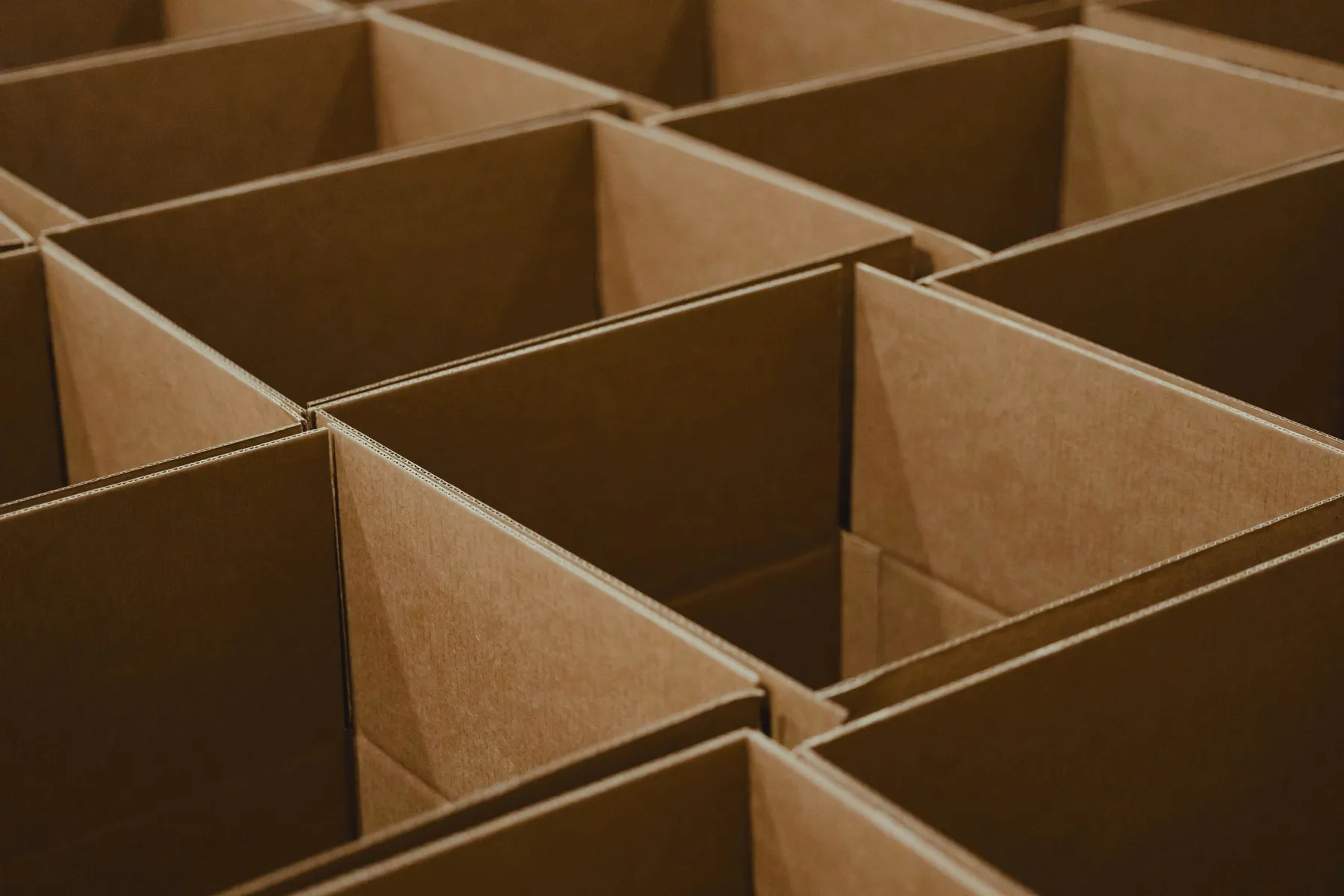
A center special slotted container has inner and outer flaps cut to different depths so that both pairs meet at the center of the box.
With no gap between the inner flaps, the product rests on a level base, and the top and bottom carry a full double thickness of board.
- FEFCO code
- 0204
- Flaps
- Outer flaps half the width deep, inner flaps half the length deep; both pairs meet at the center.
- Manufacturer’s joint
- Glued, taped or stitched glue flap
- Ships
- Flat, in strapped bundles
Where it is used
- Products that need a level floor
- Bottles and jars
- Heavier loads that need a stronger top and bottom
Closure
Tape or glue along the meeting outer flaps.
Design considerations
- Inner and outer flaps are cut to different depths, so the blank uses more board than an RSC.
- The level inner floor suits products that must sit flat, such as stacked trays or bottles.
How to specify it
| Inside dimensions | Length × width × depth in inches; length and width are the opening, depth is the height. |
|---|---|
| Board | ECT or burst grade, flute, and kraft or white top outside. |
| Plain, or the number of colors and the artwork. | |
| Contents | What the box holds and its packed weight, so the grade can be checked against the stack. |
| Quantity | Boxes per size, and whether the order repeats. |
| Delivery | City, state and ZIP code of the receiving dock. |
The complete list is in the RFQ checklist.
Other slotted styles
Regular slotted container
The standard shipping carton: four equal flaps per end, outer flaps meeting at the center.
Half slotted container
An RSC with no top flaps: an open container for use with a cover or as a tray.
Overlap slotted container
Equal flaps cut deeper so the outer flaps overlap, for stapled closures and long, narrow boxes.
Full overlap container
Flaps the full width of the box, giving a double layer of board over the top and bottom.