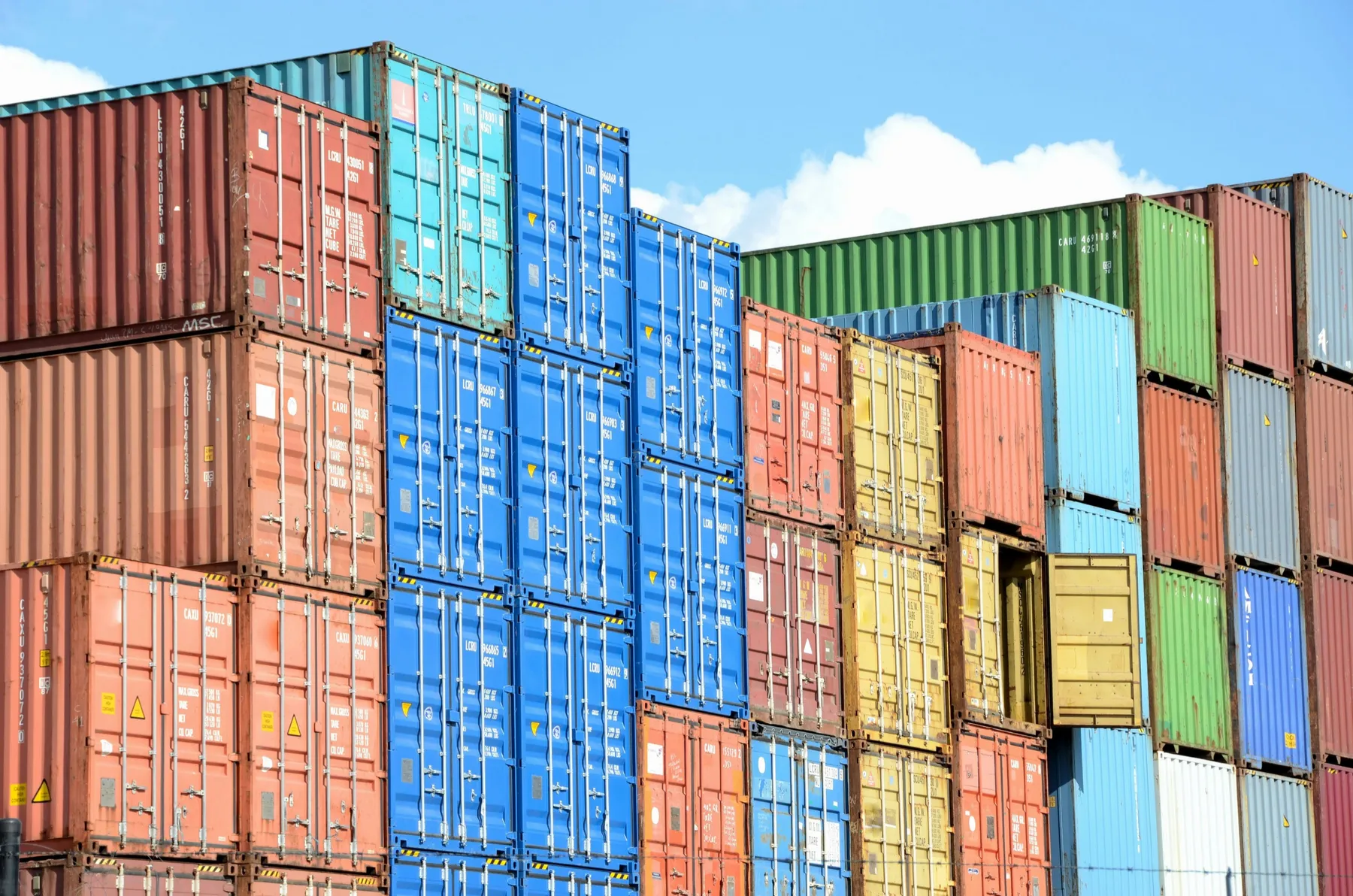
40-foot high-cube dry container
| Measure | Metric | Imperial |
|---|---|---|
| Internal length | 12.031 m | 39 ft 6 in |
| Internal width | 2.352 m | 7 ft 9 in |
| Internal height | 2.698 m | 8 ft 10 in |
| Door opening, width | 2.340 m | 7 ft 8 in |
| Door opening, height | 2.585 m | 8 ft 6 in |
| Internal capacity | 76.3 m³ | 2,695 ft³ |
| Maximum gross weight | 32,500 kg | 71,650 lb |
| Payload | 28,560 to 28,700 kg | depends on the container’s tare |
Source: OOCL, Hapag-Lloyd and DSV equipment specifications for a steel 40-foot high-cube dry container. Individual containers differ slightly; the carrier’s figures for the container assigned apply. Road weight limits at the destination can be lower than the container’s rating.
Cube, not weight, fills a box container
Flat corrugated is light for its volume, so a container of boxes is full by cube long before it reaches its payload. Capacity is planned in pallet footprints and bundle stacks. The pallet footprint is chosen for each size so that the pallets tile the container floor with little waste, and loose bundles then fill the height and the gaps.
Example loads
| Inside dimensions (in) | Millimetres | Board | Pallet (cm) | Boxes per pallet | On pallets | Pallets and loose bundles |
|---|---|---|---|---|---|---|
| 5 × 5 × 5 | 127 × 127 × 127 | C-flute, 32 ECT | 105 × 115 | 4,500 | 99,000 | 110,000 |
| 6 × 6 × 6 | 152 × 152 × 152 | C-flute, 32 ECT | 100 × 120 | 3,375 | 74,250 | 80,000 |
| 9 × 7 × 6 | 229 × 178 × 152 | C-flute, 32 ECT | 80 × 120 | 2,250 | 56,250 | 60,000 |
| 12 × 9 × 6 | 305 × 229 × 152 | C-flute, 32 ECT | 115 × 115 | 1,688 | 33,760 | 37,000 |
| 15 × 12 × 6 | 381 × 305 × 152 | C-flute, 32 ECT | 70 × 140 | 843 | 20,250 | 24,000 |
| 12 × 12 × 12 | 305 × 305 × 305 | C-flute, 32 ECT | 75 × 120 | 562 | 16,875 | 20,500 |
| 18 × 12 × 12 | 457 × 305 × 305 | C-flute, 200# test | 80 × 120 | 562 | 14,625 | 16,500 |
Every order gets its own load plan. Counts change with the flute, the bundle count, the pallet footprint and whether the receiving dock accepts loose bundles.
Mixed loads
Sizes can share a container. Each size is palletized on its own and labeled, and the load plan places the pallets so that the sizes needed first come off first where the receiver asks for it.